For as long as osteoarthritis has had a name, being diagnosed with it has meant one thing: the cartilage in your joint is wearing down, the wear cannot be undone, and the rest of your life is about managing the decline.
The treatment playbook has followed from that assumption.
Paracetamol and naproxen for the pain. A steroid injection when the pills stop being enough. Glucosamine from the supplement aisle. And a surgery consult when nothing else is left.
And the same conversation at the end of the appointment: this is wear and tear, we cannot stop it, we manage the symptoms — and when it gets bad enough, we talk about replacing the joint.
For decades, that has been the entire picture of this condition.
What has been missing from that picture is the answer to the most basic question a patient can ask.
What is actually grinding my cartilage down?
It is a question that has come up in appointments. In waiting rooms. On the stairs, one step at a time, holding the rail.
And for fifty years, the honest answer medicine has been able to give is: we can see the wear on the X-ray, but we cannot explain why it progresses the way it does.
That is finally beginning to change.
Over the last several years, research out of orthopaedics and connective tissue laboratories across the UK and Europe has been narrowing in on an answer — and it is not one anyone was looking for.
Because in osteoarthritis, the grinding is not coming from inside the joint at all.
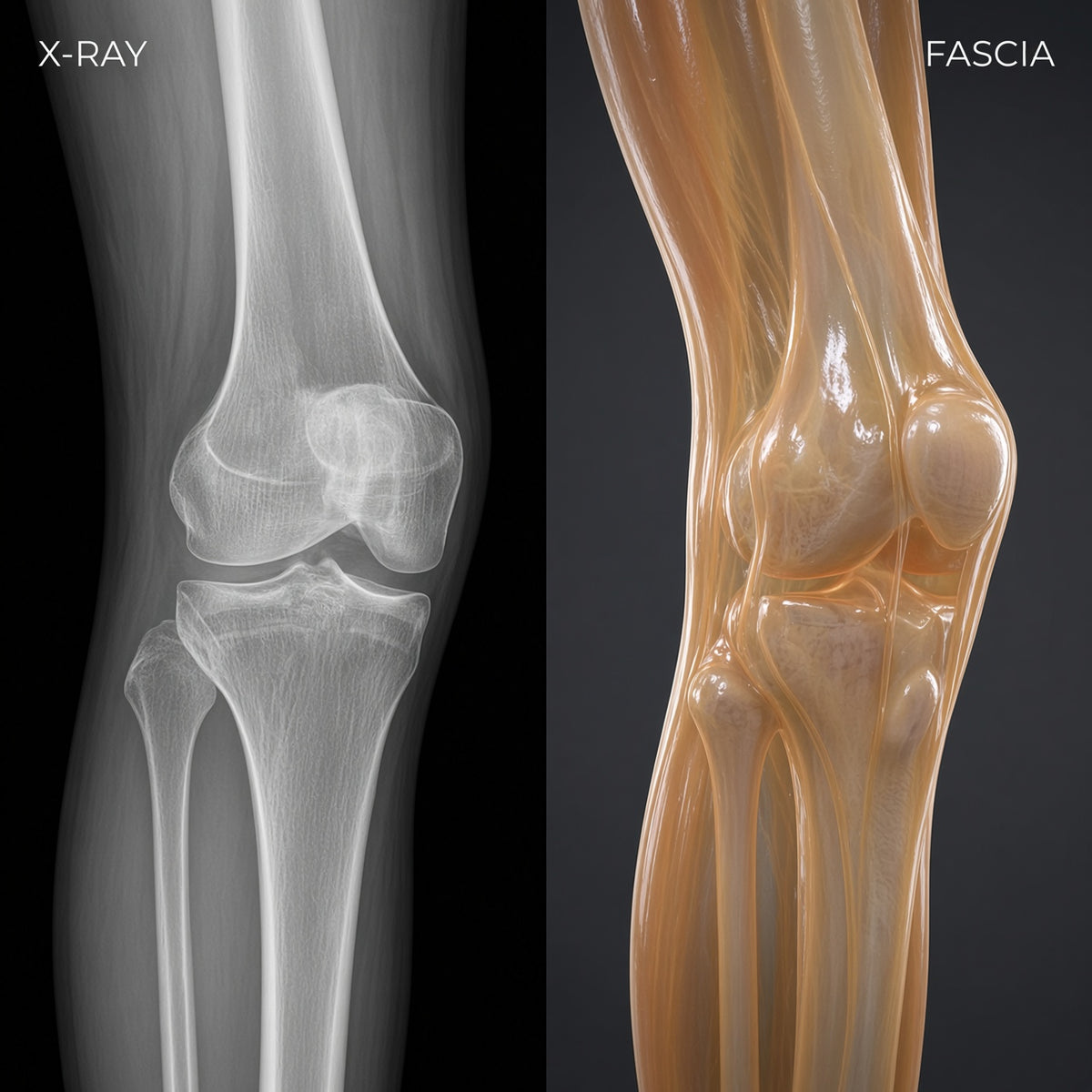
It is coming from a tissue wrapped around the joint. A tissue no X-ray was ever designed to see.
And thousands of people with osteoarthritis have already begun acting on it. Many a decade or more into the condition. Most having failed every drug, injection, and supplement on the standard list.
All of them now documenting the kind of real, measured results this condition has almost never produced.
Here is what the research shows.
THE TISSUE NO X-RAY WAS DESIGNED TO SEE
Joints do not sit in empty space.
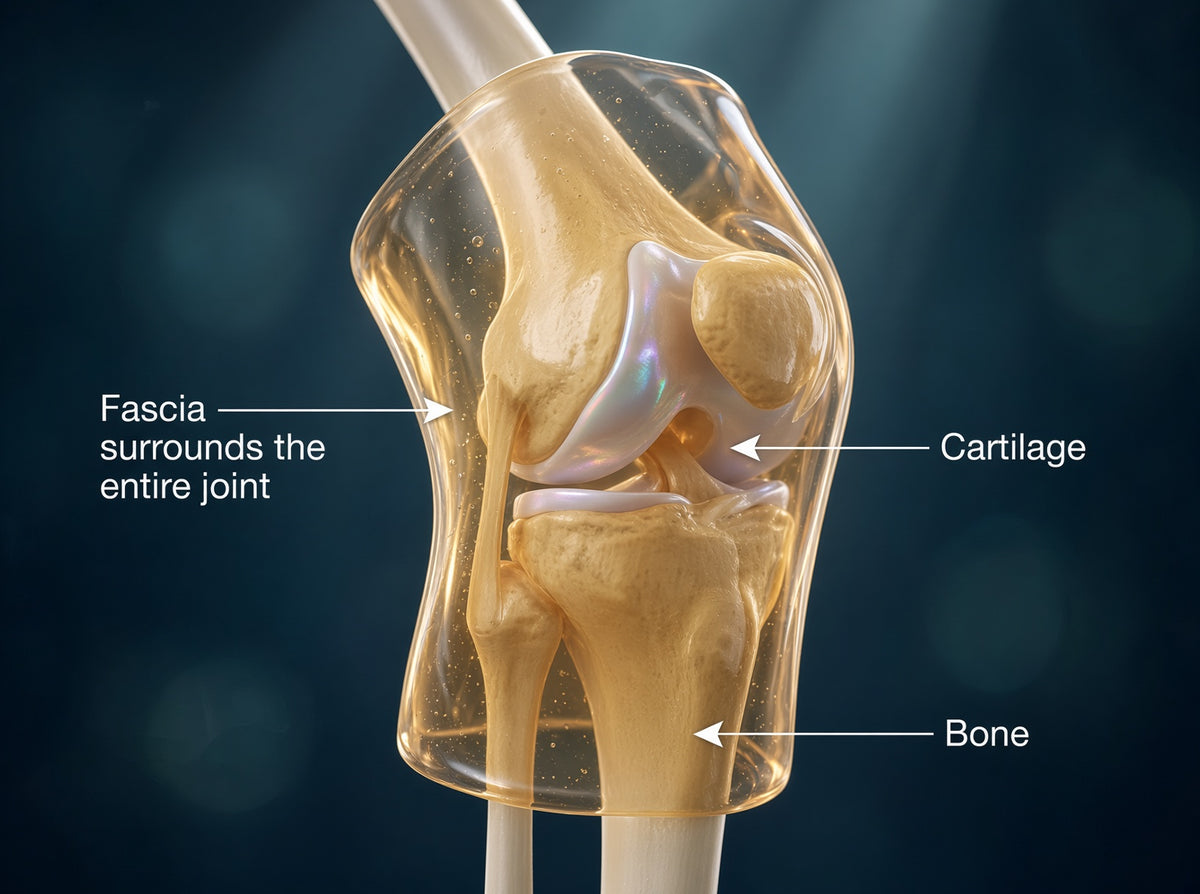
Every joint in the body — the knees, the hips, the shoulders, the hands — is wrapped, surrounded, and cushioned by a tissue called fascia.
Fascia is the connective tissue that runs through the entire body as one continuous layer. It sits directly under the skin, filling the space between every muscle, every organ, and every joint.
If a person could pull the fascia out of a body in one piece, it would come out as a single continuous sheet, running from the scalp to the soles of the feet.
Every joint in the body sits inside it.
For most of the last hundred years, fascia was considered so unimportant that medical students were taught to scrape it off in dissection lab to get to the structures underneath. Anyone who studied it seriously was considered fringe.
That has changed dramatically.
Emerging research over the last several years has established fascia as one of the most active, most consequential tissues in the human body — and central to a class of joint and stiffness conditions medicine has been trying to understand for decades.
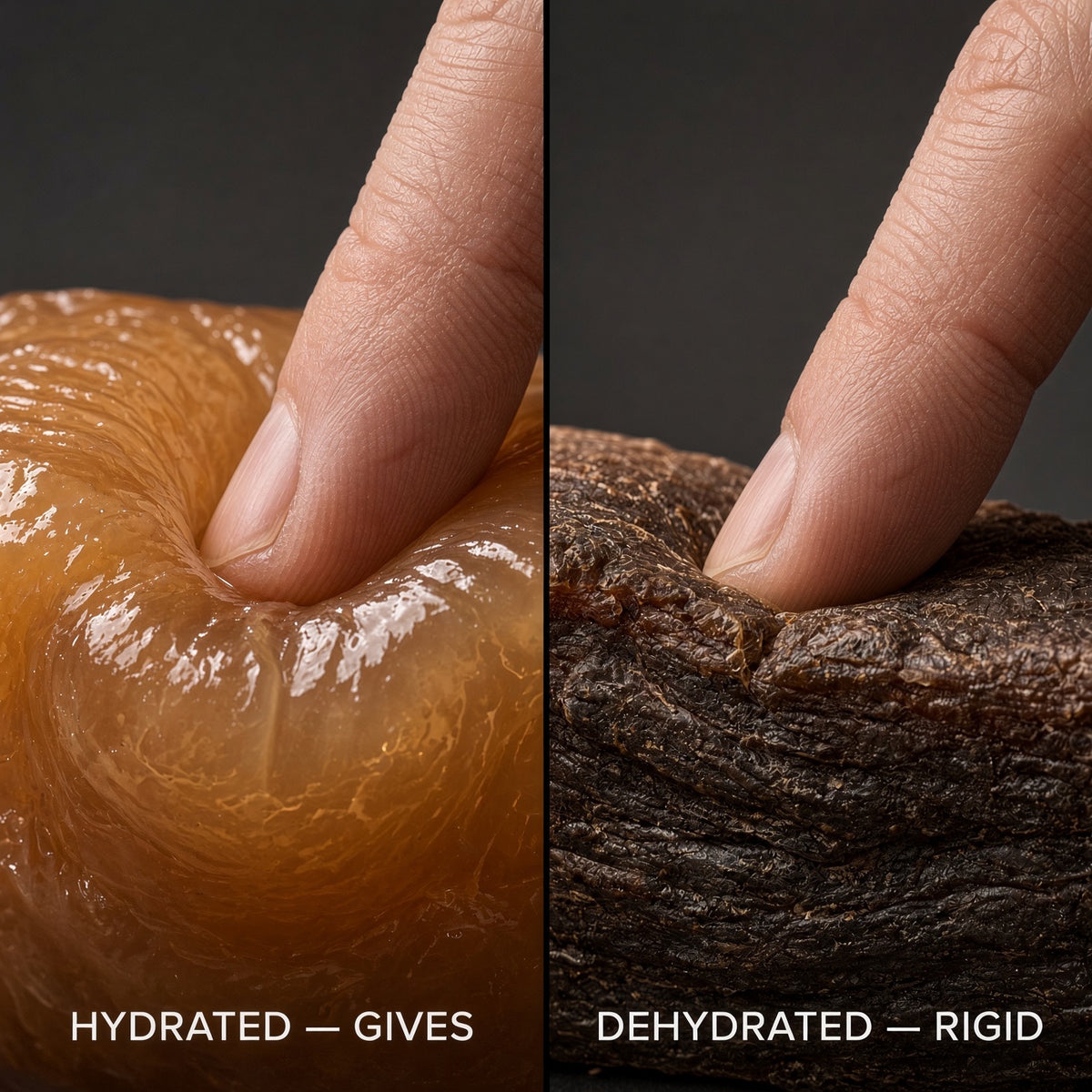
In a healthy body, fascia is soft. Hydrated. Slippery. It glides with the joint through every bend, cushioning the structures inside and letting everything move smoothly against everything else.
Nothing is felt from it, because nothing is supposed to be felt from it. It is invisible by design.
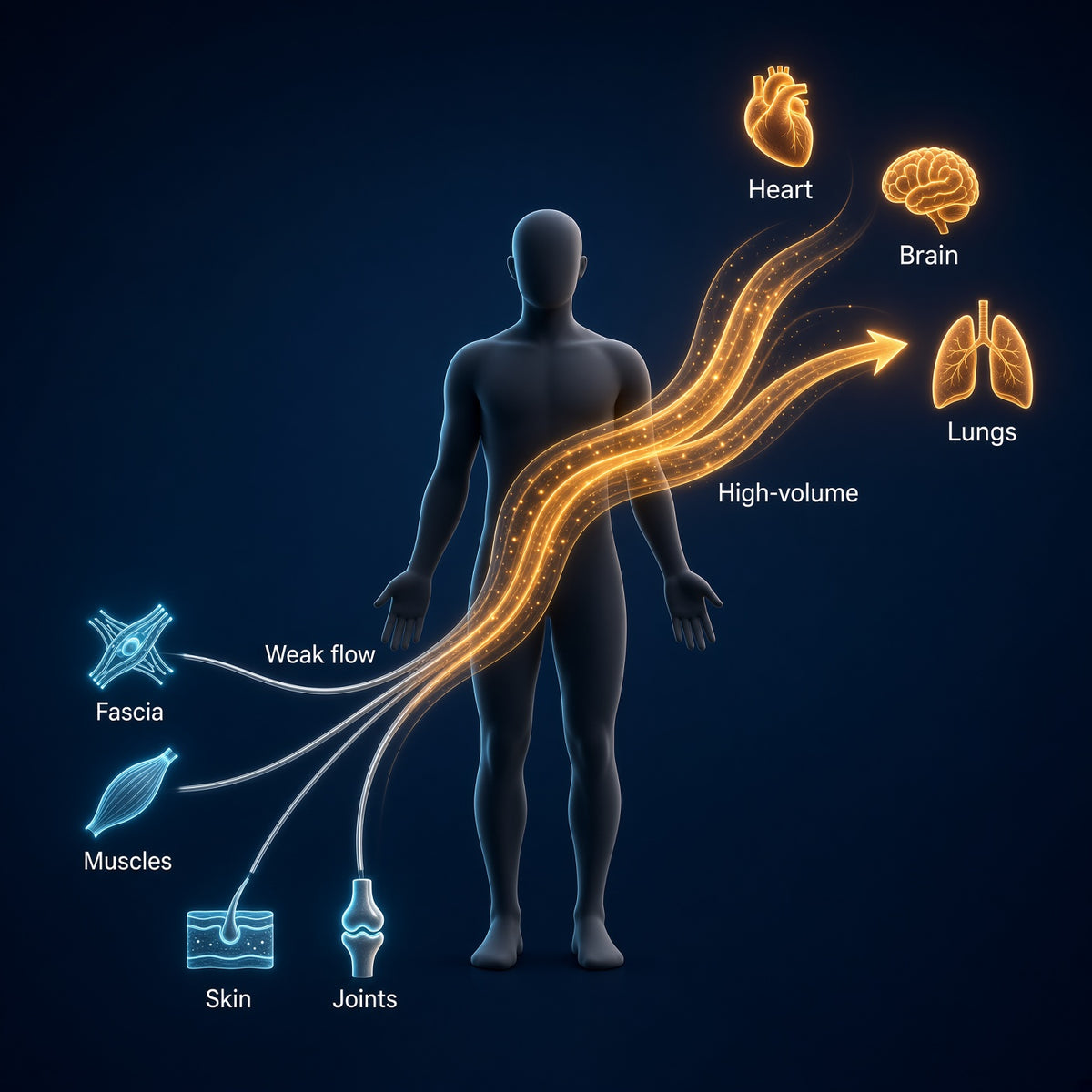
The reason it stays that way is that the body produces a specific set of nutrients — on its own, in the background — that keep the fascia hydrated. As long as those nutrients keep arriving, the fascia stays soft.
In an osteoarthritis body, that is no longer what it looks like.
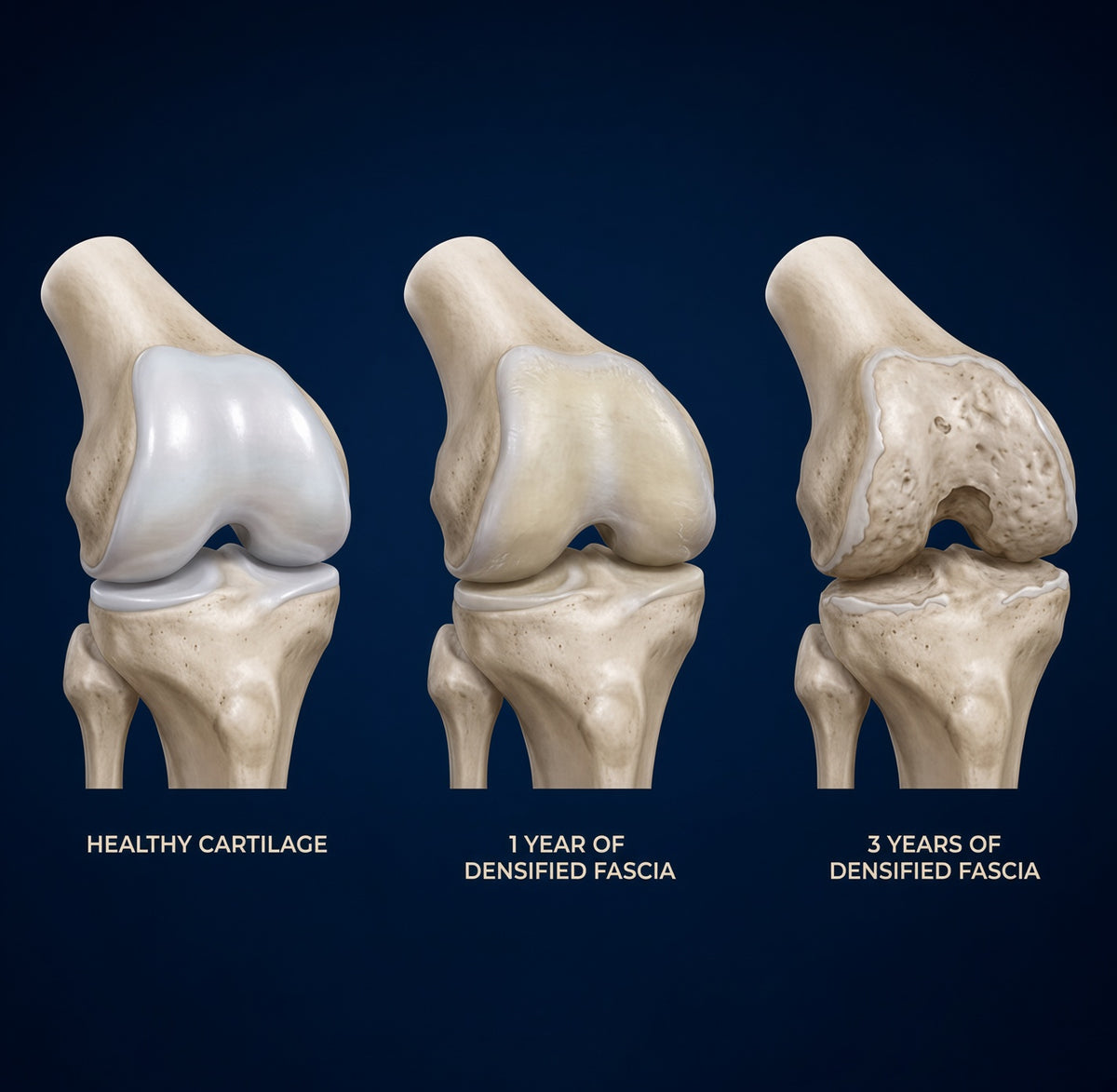
Recent studies have documented what happens to the fascia surrounding the joints of people with osteoarthritis.
It dries out. It densifies.
The soft, hydrated cushion that used to glide with the joint becomes stiff, rigid, and abrasive — and every time the joint bends, the dried-out casing drags against the cartilage inside.
Not once. Not occasionally. Every step, every stair, every squat — thousands of times a day, for years.
EVIDENCEPEER-REVIEWED FINDINGS
01 FASCIAL CHANGES IN HIP OSTEOARTHRITIS
A 2024 paper mapped, at the cellular level, what happens inside the fascia of patients with hip osteoarthritis. The fascia was dense, rigid, and stripped of the lubricating fluids that keep healthy fascia slippery — behaving like a stiff, dry casing wrapped around the joint, altering the way force moved through it and accelerating the cartilage degradation the patients had been diagnosed with.
Frontiers in Medicine · 2024
The cushion has become sandpaper.
That grinding is what patients describe as walking on gravel, or the dry, hollow feeling deep in the joint, or the audible pop and crunch when they stand up. Most people assume that sound is bone rubbing against bone. It usually is not.
True bone-on-bone is the endpoint of the condition — the stage when the cartilage is gone entirely. What most people with osteoarthritis are feeling is earlier in the process: the fascial casing above the cartilage, scraping against it with every movement. The cartilage is still there. The joint is still working. But piece by piece, movement by movement, it is being worn away. From the outside in.
This also answers the questions the wear-and-tear story never could.
If age wears cartilage out, why do so many people in their seventies show clean, healthy cartilage on their scans? Why are some people bone-on-bone at fifty? And if osteoarthritis is a cartilage problem in one joint, why do so many of the same patients describe feeling stiff everywhere — their back, their shoulders, their hands, their whole body?
The variable was never age itself. It is the state of the fascia. And because fascia runs through the whole body as one connected layer, when it densifies, it does not densify in just one place. It changes everywhere at once.
And this is the reason so many patients have watched their symptoms progress while their scans lagged years behind what they were feeling.
An X-ray shows bone, and the space between bones. An MRI shows the cartilage and the structures inside the joint.
Every one of them was designed to measure the joint. None of them were designed to look at the tissue around it.
For fifty years, medicine has been reading the right scans on the wrong tissue.
WHY EVERY SYMPTOM FINALLY MAKES SENSE
Once the mechanism is understood, every symptom of osteoarthritis — the ones that have always seemed random, the ones that never quite matched what the scan showed — starts to fit together. Not as several unrelated problems. As one problem, showing up in several places.
01
The Grinding and Crunching
Sounds like Rice KrispiesCrunching on every stairA grinding gravel feelingPop and crackle standing up
Healthy fascia glides over the joint silently — that is what it is for. Densified fascia does not glide. It catches, snaps, and scrapes across the cartilage with every bend, and the sound and sensation travel through the joint as crunching and grinding. The louder and rougher it gets, the drier and harder the fascia has become.
Most people assume the crunch is bone on bone. Usually it is not — it is the dried-out fascia scraping the cartilage it was supposed to protect.
02
The Ache That Ruins Your Sleep
An ache so deep it ruins sleepWorst in the late eveningThrobbing no cream can reachWaking up every time you turn over
This is the symptom that never made sense under the wear-and-tear story — if the pain came from use, rest should help. It does not, because densified fascia does not stop pressing when the movement stops. It squeezes the joint and the nerve endings inside it around the clock — sitting, lying down, at 2 a.m. That is the deep, bone-level ache that surfaces in the evening and will not let the joint rest against a mattress.
The ache is not coming from the day's activity. It is the pressure of hardened fascia that never lets up — even when you do.
03
Locked Up Every Morning
20 minutes to get movingLocked up after a long driveStiff after every movieWarming up just to walk normally
Healthy fascia stays soft whether it moves or not. Densified fascia seizes whenever it stops being moved — overnight, at a desk, in a car. The joint is not rusting; the fascia around it has stiffened into place, and the painful "warming up" is the work of forcing that dried tissue to give again. Which is why rest — the thing that is supposed to help — so often makes the joint harder to move.
The stiffness after rest is not age catching up overnight. It is the fascia seizing every time it goes still.